
How to get referrals without asking: lessons from Steve Brossman
Most B2B businesses already know enough people to fill their pipeline. Steve Brossman on turning those relationships into introductions, without the awkward ask.
Most B2B businesses already know enough people to fill their pipeline. What they lack is a reliable way to turn those relationships into introductions. That gap was the thread running through my recent conversation with Steve Brossman.
Steve has spent the last 20 years teaching professionals to sell their knowledge and expertise without being pushy. Long before that, in 1983, he opened a health club in Maitland and built it on referrals and retention instead of advertising, in a town where competitors were buying newspaper ads every week. The lessons he took from that business apply directly to anyone building referral partner relationships and networks today, and they line up closely with how the Referral Marketing Formula™ approaches the same problem.
The short version of Steve's answer: stop asking clients for names, and give them a well-timed opportunity to help someone they know instead. Time that conversation for the point when a client is clearly seeing results, build relationships with centers of influence who already hold your ideal clients' trust, and put as much effort into what happens before and after each introduction as into the conversation itself.
The noise problem, and why transferred trust cuts through
Markets have never been louder. AI-written posts fill every feed, automated cold outreach fills every inbox, and most of it looks and sounds the same. Steve's point is that AI has accelerated whatever you were already doing. If your message was generic before, it is now generic at scale, competing with thousands of others produced at the push of a button.
The alternative he describes is transferred trust. When someone who already holds a buyer's trust introduces you, that trust carries across to you. The buyer is no longer evaluating a stranger. They are extending confidence that already exists between two people, which is why a referred conversation starts somewhere a cold lead takes months to reach.
Your existing network is the faster pipeline
In conversations with business owners, I often ask a simple question. If your pipeline were full and you converted every client you could handle, how many new clients would that actually be? The number is almost always small. Yet the same businesses spend most of their effort on mass-market cold lead generation, which takes the longest to nurture and delivers the least trust.
Meanwhile, their existing clients and the ecosystem around them sit largely untouched. Spending even a fraction of that cold-outreach effort on the people who already know and trust you gets you to the right conversations far faster.
Stop asking for names. Offer a way to help.
Most people hate asking for referrals, and the usual ask deserves the reaction it gets. Steve uses the example of signing up at a gym, only for the salesperson to ask for a list of names before you've had a single workout. You don't know yet whether you'll get results, and you may not want anyone to know you've joined.
His alternative has two parts. First, find the point of peak excitement in your client's journey, when they are clearly seeing results and feeling good about the decision they made. Second, open with that progress, then ask whether anyone they know would want the same outcome. The question changes from who you can sell to, into who they could help. Your client is doing someone they care about a favor.
In a B2B business, that moment might be the first measurable win after onboarding, a successful project handover or a strong quarterly review. Most clients never wake up wondering who they could refer to you. Given a well-timed opportunity, many of them already know exactly who would benefit.
Look upstream for centers of influence
Steve's health club story is really a story about centers of influence. Rather than advertise, he built relationships with local businesses whose clients were already talking about getting healthy, and with health professionals whose patients needed exactly what his club offered. Those partners had the attention and trust of his ideal members well before those members ever thought about joining a gym.
It's easy to hear a gym story and decide it doesn't apply to B2B. The principle travels. Who already has the attention of your ideal client upstream, at the moment a need is identified? Which professionals have the time and trust to recommend a next step? Once you know who they are, the question becomes what value you can bring to them and their community so that introducing you is a natural thing to do. Working out who those people are, by evidence rather than by who you happen to like, is what the Ideal Referral Partner Profile Builder is designed for.
Partner with businesses that share your customers
Steve also described packaging his offer with other businesses serving the same customers at the same moment, so that each partner had a reason to recommend the others. Every business in the arrangement gained access to customers it would not otherwise have reached, and each became a source of referrals for the rest.
In the Referral Marketing Formula, a relationship built around joint offers like this is a Collaboration Partner relationship, one of the partner types covered in the Partner Program Builder.
The incentive doesn't have to be a discount. It can be a value-added service, a joint event, or a collaboration that delivers something your partner's clients genuinely need. Identify what motivates the partner, and you can have that conversation with many Referral Partners at once.
Be specific enough to be remembered
Sooner or later, a good conversation reaches the moment when someone asks who they could connect you with. Answer with "anyone who needs..." and you've lost them. People remember how you made them feel far longer than what you said, and a generic pitch makes them feel nothing.
Steve walks into a networking room with several specific ways he helps people, ready to match to whoever is in front of him. Better still, he helps people during the conversation itself, so by the time it's his turn to explain what he does, they've already experienced it. He also looks beyond the obvious purchase. Some people in the room might refer you, some might promote you to their audience, and some might become partners. Those last two are the ones most people never look for.
One right partner can change everything
A single well-matched Referral Partner can open the door to hundreds or thousands of your ideal clients. And when a partnership model works with one partner, it will work with other partners who look the same. That's what turns a lucky relationship into a systemized, scalable way to grow. Most businesses spend too little time deciding who they could collaborate with best, and even less on how they will collaborate and what value will keep that partner engaged.
The bookends matter more than the middle
Steve's closing advice is the part most worth acting on. Most people put all their effort into the conversation itself. The results come from what happens before and after it.
Before: when someone introduces you, do your homework. Look at the other person's website and LinkedIn profile, then send a short, personal message saying why you are looking forward to talking. They arrive at the call already interested.
After: follow up while you still remember what you promised. Steve blocks time straight after every networking event for exactly this, so the people he met don't blur into the next meeting. And when an introduction turns into something, he goes back to the person who made it, tells them what happened and thanks them. Referral Partners who feel valued keep referring, and one well-looked-after introduction often leads to the next.
Everyone is trying to automate follow-up. The personal touch is exactly what stands out because of it. Fortune really is in the follow-up.
Common questions
How do you get referrals without asking for them?
Replace the request for names with an opportunity to help. Time the conversation for when your client is clearly getting results, acknowledge that progress, then ask whether anyone they know would want the same outcome. Pair that with partners who already have your ideal clients' trust and value to offer them, and introductions start to arrive without a traditional ask.
When is the best time to ask a client for a referral?
At their point of peak excitement, which is early enough that the experience is fresh and late enough that they have seen real results. Every business has its own version of that moment, and it is worth identifying deliberately rather than asking at signing.
What is transferred trust?
Transferred trust, the term Steve Brossman uses for it, is the confidence a buyer extends to you because someone they already trust introduced you. It shortens the path from first contact to a real conversation, which is why referred introductions tend to convert faster than cold leads.
How do I make networking more effective?
Be in fewer rooms with better-quality, better-aligned people. Arrive with specific ways you help, look for people who could refer, promote or partner with you as well as buy, and set aside time immediately afterward to follow up.
Who is Steve Brossman?
Steve Brossman teaches professionals to sell their knowledge, skills and expertise without being pushy or salesy. A former athlete, he opened his first health club in 1983 and built it on referrals and partnerships rather than advertising, and he has spent the last 20 years helping others apply the same approach through courses including How to Sell Yourself Without Selling Your Soul.
Using Refer2u
Knowing who your centers of influence are is the first step. Keeping track of them is the hard part. Refer2u, the Referral Partner Ecosystem, lets you define your Ideal Referral Partner Profile once, bring your existing connections in, and see who in your network already matches it and who already has trusted access to the people you want to reach. Start here.
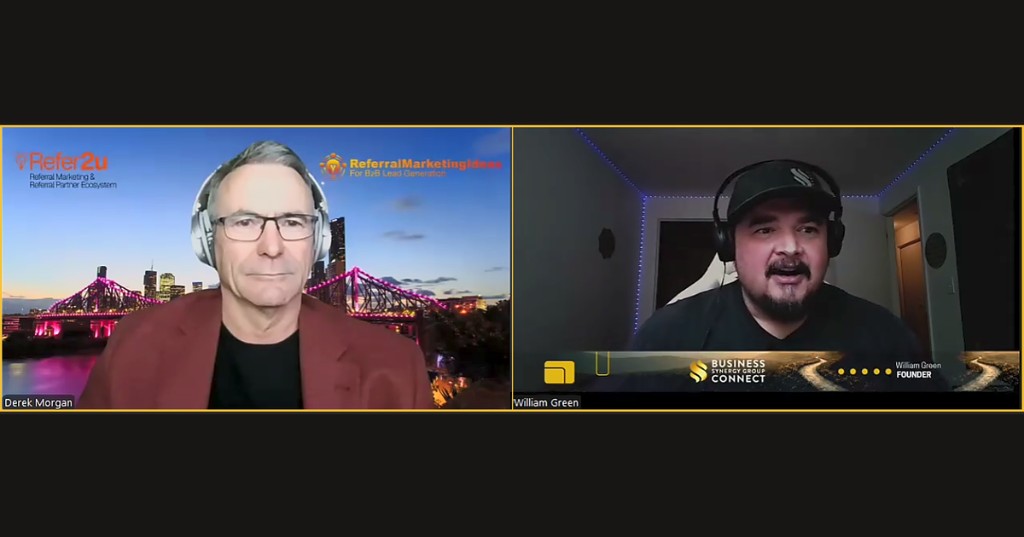
Watch the full conversation with Steve above, or on YouTube. Which of these ideas would change the most in your business? Let us know on LinkedIn which one you want us to go deeper on next.
Ready to build your referral system? Read the Referral Marketing Formula™, explore our services, read the FAQ, or get in touch.
Related articles
The $44 million referral opportunity nobody followed up on
A single introduction that was never followed up cost one technology company an estimated $44 million over two years. Here is what unidentified opportunity cost looks like when nobody tracks what happens after the room agrees the fit makes sense.

How to turn informal referrals into a predictable B2B growth engine
Most B2B teams treat referrals as luck. Here is how to design a system that produces qualified introductions month after month, without cold outreach or ad spend.

How to identify and recruit ideal referral partners
The partners who send you the best leads are rarely the loudest in the room. Learn how to spot complementary businesses and start conversations that convert.